Monday, July 14, 2008
Teach India
Times of India discusses special programs and inclusion for Learning Disabled Kids in India.
Aranya is eight and in her drawings, elephants can fly. She enjoys art and has a vivid imagination, but when it comes to her studies, she struggles with writing and concentration.
Aranya is suffering from Attention Deficit Hyperactivity Disorder (ADHD), a neuro-behavioural developmental disorder. The condition manifests itself during childhood and is characterised by a persistent pattern of inattention, forgetfulness, poor impulse control and distraction.
Often children like Aranya are labelled 'lazy' or 'dumb' although they are neither. "My daughter is very creative. She loves painting animals and working with clay. All she needs is a little more time to grasp her lessons. It is unfortunate that in the pursuit of high scores the power of the imagination is under-estimated," says Aranya's mother.
Every child is unique and has his/her own needs. While some need more help to learn and take longer, in the end, they can all learn. "No two children learn the same way. A child has to discover how she/he learns best. There are three ways in which we learn and remember things – by seeing, hearing or doing," says Geet Oberoi, founder-president, Orkids, The Multidisciplinary Clinic.
Children with special educational needs (SEN) find learning more difficult than the majority of children their age. Although the reasons could be diverse, what is most important is that nearly all these children can reach their full potential with additional support and understanding.
NO CHARITY, PLEASE
Inclusive education means every child irrespective of gender, religion, socio-economic background or needs has the right to attend a mainstream school. Though the government claims to ensure education for every child, schools still lack an inclusive environment where students with different learning needs are made to feel welcome.
Oberoi, however, cautions that though inclusive education is the new mantra, it is not a given that all children with special needs would benefit from it. Instead, she says, "We need to focus on a child's specific needs and then analyse how a mainstream classroom can benefit the child in his/her learning process."
According to Satish Kapoor, founder-director, Brotherhood, "Inclusion is an extremely complex process as traditional ways of thinking and organising education are challenged at the deepest level. It denotes more than the physical placement of a child. It is the provision of educational services to all students in such a manner that all of them, with and without disability, belong, and are considered equal members of the classroom. Besides, society has an equally important role to play in achieving inclusion."
Many schools follow an integrated approach rather than an inclusive one, which means that they have SEN departments within the school to assess children and accordingly provide extra learning support.
The New Yorker Cover
The New Yorker cover is creating quite a stir. It would be a pity if the right wingers would benefit from it. The cover creates caricatures of Obama as Osama and Michelle as a black panther, both ideas created by the Conservative media and politicians in this country. Alternet reacts to the cover negatively.
The Bad Frame: Why Are the New Yorker, Salon and Other Liberal Media Doing the Right's Dirty Work?
By Don Hazen, AlterNet. Posted July 14, 2008.
This week's New Yorker cover image of the Obamas is shocking in the racism and gross stereotyping that is built into its supposed satire. Tools
The New Yorker magazine hits the news stands today with a shocking cover -- a caricature of Barack and Michelle Obama depicting the presidential candidate in a turban, fist-bumping his wife who has a machine gun slung over her shoulder, while the American flag burns in the fireplace. The cover is shocking in that it depicts the Obamas in bizarre caricatured images and associations which reflect the very stereotypes with which the conservatives, particularly Fox News, have been trying to frame both the Obamas. Thus, instead of satire, the cover becomes a political poster for conservatives to reinforce their messages. Senator Obama was shown the cover image by a reporter covering the campaign on Sunday, and while seemingly taken aback, he declined to comment.
But the Obama campaign quickly put out a release condemning the magazine cover. Bill Burton, a spokesman for Obama, said in a statement: "The New Yorker may think, as one of their staff explained to us, that their cover is a satirical lampoon of the caricature Sen. Obama's right-wing critics have tried to create. But most readers will see it as tasteless and offensive. And we agree."
Unfortunately the impact of this image will extend far beyond the reading audience of the New Yorker; cable news and the right-wing media noise machine will amplify the derogatory image to millions more. And the New Yorker of course will reap enormous publicity, clearly translating to increased sales and notoriety for the brand, and for corporate owner Conde Nast -- one of the largest and most powerful media companies in America.
But the publicity could very well backfire. Editor David Remnick and artist Barry Blitt's attempt at satire seems so arrogant and indulgent in its insensitive and out of touch with political and media dynamics of tabloid TV and blogs, that it just might make a lot of people angry, including some subscribers. The cover turns the magazine into a potential Molotov cocktail, to be gleefully tossed by Fox News and the conservative blogs, into the already combustible tinderbox of race and muslim stereotypes just below the surface of America's public discourse.
John Arovosis at America Blog writes:
A liberal publication like the New Yorker thinks it's funny to make Mrs. Obama some radical black panther, and Barack Obama basically a terrorist (you'll note that he looks just like Osama bin Laden on the wall). And this is funny? Is the New Yorker so out of touch that they don't realize that much of America, or at least too much of America, harbors these very concerns about Obama and his wife?
"This might be a case of the liberal media "that bends over so far backwards to be "fair" that it becomes just as bad as FOX News. I'm sure the New Yorker thinks they're actually poking holes in the myth by making light of the stereotypes. Yeah, and tell us how this pokes fun at the stereotype? It reinforces it. And yet again, you'd never see them try anything like this with John McCain. God forbid you even ask a question about John McCain's experience, the media will destroy you. But paint Obama and his wife as America-hating flag-burning violent terrorists, and it's funny.
Jake Tapper of ABC News adds:
"Intent factors into these matters, of course, but no Upper East Side liberal -- no matter how superior they feel their intellect is -- should assume that just because they're mocking such ridiculousness, the illustration won't feed into the same beast in emails and other media. It's a recruitment poster for the right-wing.
""This is as offensive a caricature as any magazine could publish," says a high-profile Obama supporter, "and I suspect that other Obama supporters like me are also thinking about not subscribing to or buying a magazine that trafficks in such trash."
Lindsay Beyerstein, who blogs at Majikthise makes an important point in emphasizing that:
"Our national discourse is impoverished when it comes to racially-loaded images like the New Yorker cover. When I saw the cover, it was clear to me that the the cartoonist was trying to covey a true and important point: All the Obama myths, like his Muslim father, fit together into a coherent and poisonously racist wingnut caricature. These aren't just random rumors. The anti-Obama mythos is a continuation of the ugly narratives that conservatives have been spinning since the civil-rights movement and before. That said, if you put those images on the cover of a national magazine, you're helping Fox spread those sick memes -- whether you intend to or not. It's easy to say "my work means what I mean it to mean, and if you don't get it, that's your problem" -- but it's never that simple. If you're approaching an assignment from a position of incredible privilege, say as a cover cartoonist for the New Yorker, you can't just write off the unintended consequences of your expression. If you insist on doing so, maybe that is racist."
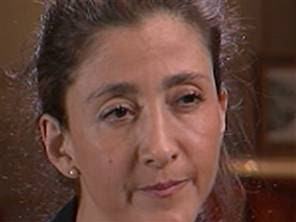
Ingrid Betancourt
Buddha Diaries writes about recently released French Columbian politician Ingrid Betancourt and her Buddhist wisdom. She seems incredibly serene inspite of her torture and captivity for 6 years in a Columbian jungle camp.
... there is no room for hate." So says Ingrid Betancourt, out of the wisdom of her six years of captivity in Columbian jungle camps by the Revolutionary Armed Forces of Columbia. "You have to pardon," she continues. I think that's the key of everything. We're human beings. We think different, we act different, but we are human beings."
I watched the few moments of her interview with NBC's Ann Curry that their morning show could spare, and was glad indeed to encounter her humanity. She spoke of the necessity for compassion not out of some philosophical belief, but out of a heart and body exposed to worst a human being might have to experience; extending it not only to those she loves, but to her captors, imprisoners, and torturers. There's true wisdom for you, compassion in its most generous and non-judgmental form. Let's call her "enlightened." To watch Betancourt and listen to her speak is to see and hear Buddhism in practice, with none of its religious trappings but all of its human understanding. Perhaps she, seemingly a devout Catholic, would call it simply Christian. If so, it's Christianity as Christ surely intended it.
"Vengeance is a chain." Listening to these words, I could not help but think about our hapless situation in Iraq, and how the piously "Christian" man in the White House and those he chose to appoint as his advisers exploited our instinctive (read "primitive") need for vengeance after the 9/11 attacks in order to promote his aggressive resource war for oil; and how we are now "chained" to the Middle East in ways that might have been avoided, had he chosen instead the path of wisdom and compassion. Clearly we needed, at that moment, to do what was necessary to protect ourselves from further attack: I personally think that a forceful response to Al Qaeda and its Taliban supporters in Afghanistan was necessary, if regrettable--not as an act of vengeance, but rather as a practical strategy for self-defense.
The invasion of Iraq was a different matter entirely. It could not have been achieved, I think, without the provocation of 9/11. I don't believe the American people would have tolerated the aggression without the exploitation of their emotional reaction to the 9/11 attacks. As a nation, we were still hot with shock and righteous anger, and still grieving those thousands of us who had died. In our rage, we were persuaded to overlook the well-established truth, that violence breeds only violence, and that vengeance never fails to wreak as great a devastation on its perpetrator as upon its victim. Compassion was the last thing on our minds as we surveyed the wreckage of the World Trade Center, deprived of even the bodies of the dead to bury.
Had we done more to address the root causes--among them, the genuine feeling in the Muslim world that the West was out to exploit their resources at the cost of their cultural and religious heritage--we might find ourselves in a very different situation today. Had we been just a little more Buddhist--or more Christian--in our response, we might now have more friends than enemies in that part of the world. Had we really paid attention and fully realized the role of oil in all this global instability, we might have begun to address our own addiction and be headed, already, toward a diminished dependency and a less threatened planet.
Instead, we chose vengeance. And what a powerful chain it has proved to be. We have yet to learn the lesson of Ingrid Betancourt. "We're human beings. We think different, we act different, but we are [all] human beings
Fair and Lovely
Saja describes the Indian obsession with fairness and the beauty products and advertisements that come with it.
ADVERTISING: India's "White Beauty" ads and the fair skin fixation
According to The Independent, women's activists in India are upset about a television ad campaign pushing Pond's "White Beauty" cream. The advertisements, in the form of a multi-episode "miniseries," featuring Bollywood stars, has Saif Ali Khan choosing Neha Dhupia over the "dusky" Priyanka Chopra, who inevitably places her hopes for love in the cream's transformative power. The spot ends with a tantalizing offer: "pale white or pinkish white; you choose."
While the spot is laughably ridiculous, it's also racist, and a testament to the rampant hysterical colorism in South Asia (and amongst South Asians in the diaspora). One wishes the cultural confidence that economic power has afforded India would also help undo our colonially inspired fixation on skin color; but with such a large market for skin lightening products, and not just for women, the likelihood of this is slim. And desi racism isn't just reflexive; as recent events illustrate, we have a long way to go.
More on the campaign at LiveMint.com:
The campaign was aired on 46 channels including major Hindi general entertainment channels, niche as well as regional channels. The first
episode is 45-seconds long, and new episodes will be aired every 15 days.
“Every episode leaves you at that point where you want to know what happens next,” says Zenobia Pithawalla, senior creative director at Ogilvy and Mather Pvt. Ltd, the ad agency that designed the campaign.
The rest of the story will play out over the next few months and viewers will be able to see, in true Bollywood style, how Chopra transforms herself from an ugly duckling to a beautiful woman.
Wednesday, July 09, 2008
Ashrama Dharma in the Vedic tradition
Lecture by Dheera Chaitanya
Each society has its own idea of how people should live and interact with each other and live with others. In the Vedic Tradition this idea is also present. It is to maintain a certain degree of harmony. Is this topic still relevant? We are more modern now. Things evolve. Knowledge keeps growing.
But when it comes to do with oneself. How much has changed since 1000’s of years ago.
Valmiki wrote the Ramayan. He asked Narada who strides many worlds, is there a person who has gunas like right and wrong, is strong is a dharmagyani. Who is able to translate knowledge into actions? He is Satyavan. He is a man of resolve. People like to relate to him. People do not like to deal with people who are pains. He is not a victim of his own emotions. Someone who is non reactive, has conquered his anger and envy. All these qualities put together a person.
The positive qualities in a person have not changed so the age old Dharma Shastras are still relevant. Dharma Shastra is a manual on how to live ones life on a personal level and in society. Human behavior is not self operating. Animals like monkeys have behavior that is self operating. There confrontations are to do with creating a hierarchy.
Human beings have a freedom of choice, so certain guidelines are important for behavior. Animals are preprogrammed we are not. We are not born with a capacity to make good choices. But the time we are ready to figure it out we are usually too old. Therefore we need an instruction manual. The manual also tells us about the purpose of life. We need to improve on our environment. Scriptures help discover meaning in life.
Syambhu (Manu) tells his son to became a grashatha and take on the life of a householder. But his son is more spiritual and not interested in the mundane world. A jeeva is born to experience the world, in birth and death. You are born to do Karma and experience the karma of past actions, through sukha and dukha. The jagat manifests and everyone is subject to it, including myself Brahma and lord Shiva. In the process he grows and learns.
How we view human experience is different in east and west.
I am born and what relationship do I have with others. Freedom is the final end. Another way of looking at human experience is more western. The bigger scheme is here, I am a participant. The world has been created for human consumption. Whatever there is in the world, since humans are the most evolved its all here for my consumption. I have to consume, subjugate, conquer and use. I have to change my environment to suit my needs. Consumption is not just eating, but also includes enjoyment. I protect my right to enjoy them. If I was concerned about sanctity of animals, I would not protect one and eat another. End result to give oneself time to enjoy. So much available, but my capacity to enjoy is limited.
How am I going to experience this world? Live purely a consumer based on likes and dislikes (Raga Dvesha). Or am I part of a larger picture. Or do I like a non consumer oriented life.
The Vedas are a body of knowledge complied in 4 different sections, basically saying the same thing.
There is another body of knowledge called Vedantagas- consisting of phonetics, grammar, miter, etymology, know how of performing rituals, astrology.
Sutra is a brief cryptic statement.
Values are mentioned in Kalpa Sutras
Dharma Sutras talk in detail about individual conduct, as members of a society and family.
Dharma shastras is a body of knowledge that deals with conduct and behavior on a personal level for the purpose of helping me do things.
At the end of life we should have a sense of resolution or fulfillment.
The tradition has a vision of human beings achieving this freedom. The goal is the basis of my very existence, and I can live my life as an expression of that fulfillment and contentment. The path is hard, and the process becames an expression of the actualization of the goal. Dharma does not become a shackle but creates a harmony about my existence. This is the subject matter.
Many books are written by Rishis or Smriti’s eg Manusmiriti. There are 18 Smritis available, each emphasize different elements.
In addition to that we have in India regional Smritis based on culture. Nibandagranthas.
How did the rules and regulations come about?
Are they like driving rules?
The rishis asked Vyasa. He said I studied it from my father.
He says these dharmas are the same as the ones in previous Yugas Centuries. At the end of KalYuga they go away. Only Brahma will remember these rules. Manifest of the unmanifest and the manifested again. You either work with harmony with it or against it, that is your choice.
This is how the whole idea of dharma and adharma is understood. Ultimately the right and wrong is connected to the vision of the Vedas and with which our whole life is connected.
Why is it necessary to live a life of dharma?
Growth is an important thing, physical growth does not insure cognitive growth. Cognitive growth does not insure emotional growth. Because I am informed and intelligent Emotional growth does not insure spiritual growth. One does not insure that the other will be there. In the Vedic vision living with spiritual values helps you lead a good life towards freedom or moksha. Yoga shashtra is a life of discipline and study. This leads to freedom of sansara and janama. The sansar binds you as a consumer, draws you in and binds you in. If you recognize karma, janma also becomes bondage. Dharma is duty.
What duties are expected of me as a person. They vary depending on the human being. But there are some general prescriptions. These are grouped under Varna and Ashrama Dharma.
Varna is explained as caste. Based on inner qualities and work that you do.
Ashrama dharma is a stage of growth. Depending on your age your requirements are different. By performing the duties, a person becomes a mature person. There are some universal values that are within the context of dharma. Truthfulness is a universal value. As is not hurting each other. First stage is pre marriage Brahmacharya. Before 7 he lives according to his natural instinct, as he wishes he eats talks etc. Not liable for his actions. It takes about 14 years for a person to mature. Emphasis is on study and being a student.
After age of 7 kids realize intent. Also at this stage it’s a life of austerity. Some degree of mastery over likes and dislikes comes later with the practice of austerity now. Service to teachers and parents with emphasis on prayers. This is a learning period. Secular and religious education. Secular education teaches you how to pursue artha karma (securities and pleasure). Religious education is for the weekend here. In the Vedic tradition everything is sacred. The spiritual pervades the secular. Your artha karma has to be in the rubric of the spiritual. It cannot be isolated from a through understanding of write and wrong. They are learning to negotiate there identity in the world.
We can recognize it by understanding how to use today. What is priority what is not as a parent one has to decide? Help your child negotiate through the system. Give your child clear messages. This cannot be separated from a person’s life. After completing brahmacharya education he comes back, with a good sense of dharma. And is ready to embark on a new phase of life.
He should not remain in no mans land. He should continue study or live a life of a householder.
One phase prepares you for the second phase of development. If there are problems in one, there will be problems in the other. The next ashram is grastha.
Vanaprastha is after living as a grastha, after the first grandchild is born. The person retires from active pursuit of artha kama and goes to a van (forest) and its a time of tapas and learning to be with oneself. Life of solitude and prayer. If he is physically fit and lives the lifestyle of a sanyasi.
Dharma Shashtri has niyams that you have to follow.
Tyaga is giving up mental and physical concerns. Living a life of a bhikshu. In every ashram one is bound by obligation and indebt ness. One is released from all of this in Vanaprastha.
Grashta- Decides to get married. Reasons can be companionship, make someone happy, peer pressure. To be a happy fulfilled person you have to feel that you are doing things in a right way. Marriage should not be from the same lineage. From the mother’s side it should be at least 5 times removed and 7 times removed from the father side. Relationship where we complement each other, those people should get married. A person remains half until they get married then they became complete. That is the nature of creation. Whole samskara of marriage reaffirms and reestablishes rituals.
Ashrama means that which sustains living a life of tapas. It is not meant to constrain but instead to give us a direction in life.
A typical life of a householder is prayer and worship. Living a life of moderation is important, even in eating. Act mature and be non reactive. For growth to take place you need a conducive environment, in order to clean up the mess. This environment will help me see myself, be supportive, caring this will help me nourish and heal. I need an environment that I can trust. These necessities are provided in a mature relationship where there is a commitment and security. Otherwise anytime I displease someone they go away. I feel comfortable enough to feel myself.
Non judgmental and uncritical way then this will help me undo things within myself. So marriage is about commitment. Then you make a resolve to the other person and yourself to ensure that you keep your commitment in a marriage.
Self correction done on emotional and personal level when environment is conducive. Then two people grow at the same time, not one at the expense of another. We all have different areas of maturity. Self knowledge knows who I am my nature and my swarupa.
The usual mind has a lot of problems looking at things how they are. Everything is seen subjectively. My mind has to have a capacity to look at myself, not live defensively and not put up guards. Cognitively I can understand concepts, but here it is not outside yourself. I am a part of this equation. It’s important to have a simple mind that does not have too many complexes, it sees things as they are, and it sees the obvious. The mind that has fewer projections and more shraddha you will gain gyanam.
Attachment and dispassion.
For 2 people to be compatible in every way is very difficult. But as long as both are growing it is ok. If the spouse is anukulam (compatible) then it is swarga (heaven). If the two are working against each other, then no doubt you are living in hell. What makes things Anukulam and what makes them Pratikulam.
Some factors that make a relationship Anukulam.
My rights I demand while others demand theirs, instead if we think of them as duties to perform it will be different. I gain from the performance of my duty; I get a sense of fulfillment.
We come from different experiences, so we cannot be similar. How to make those differences work in our favor. Look at yourself as an individual relating to another individual. Ashrama becames a Sadhana, we should see Marriage also as a sadhana. What is the end ? Personal growth? One has to play different roles in society, for that you need a sense of security. We should not lose our individuality in the process. These attitudes bring about a sense of harmony in the home.
Being reactive is also not helpful. Lots of people react aggressively in the dinning table. How they react to food is very important. It shows a fulfillment of a basic need. Some people react angrily if the salt is too much or too little. It is not based on reality but instead it is based on projections.
A certain degree of self awareness is important, so one can look at oneself and then see how to respond.
Not knowing the difference between fulfilling ones needs and being overly needy. Whatever comes is not enough, does not give contentment or satisfaction. It has to do with a sense of being deprived. People who have low self esteem have these issues. On the other hand a person may have too much then they will still feel that they do not have enough.
Control is another important issue. In adulthood we need to sort out our issues. We are controlling when we feel not in control. It is a way to overcompensate. In life there are things that are out of our control, some people deal with it while others cannot deal with it. It is a defensive tactic. We try to control parents, children and spouses. Learning how to deal with unexpected changes is an important lesson.
Being a parent is a very important lesson to again go through childhood. Time does not come back. When we have the capacity we do not have the wisdom, when we have the wisdom we do not have the capacity.
When we have children we have to become a teacher, so we have to relearn all that I did not know. We gain certain clarity about our life. It is more than a commitment than a marriage. They are there to stay and harass you as long as you are around. Parenting helps one grow.
Trusting somebody is important. We all trust and mistrust it depends on the situation.
But what degree of trust am I capable of trusting. If I am not trusted I lose trust in the other person. If I do not have a capacity of trust I will not trust people. We have to rediscover the capacity to trust. We will only trust that who is not fallible, that person is only god.
If I do not react, then I am accommodating the other person or I have shanti. But for that I need to have trust and something bigger. This is all a process of growth and an opportunity for self growth.
The one who has shraddha gains gyanam, it is based on trust of the guru. Cognitively we need to look at the bigger picture.
Anger is another reaction to frustration. It is a very uncomfortable feeling. There are different expressions of anger. Men and women show anger differently. Men express anger by fight or flight. They hurt by criticizing, putting them down, saying hurtful things. They do it because they are hurting. This is how they deal with their anger. Or they withdraw or back off. You act like the person does not exist, or you withhold attention, caring and affection. Women act like it does not bother them, they minimize the whole thing, and they fake it. But that does not work because it is not true or honest and it leads to more hurt or they go along with it. This leads to a loss of individuality. They try to keep the peace, an enabling kind of thing. This leads to depression. It is important to express it as it is. This takes a simple mind. Saying I feel hurt is important. A simple mind can be what it is.
How does our tradition envision a couple at the end of the maturing process. Agnividya and Maitreya. Are these things that you are ready to give up, will they make me happy. He teachers Brahma vidya. Both of them in this story a certain degree of tyaga is necessary both have as much tyaga as each other. Both have reached the point. Single people form a unit of one, once you get married that unit, is shared by 2 halfs each person being half a unit. But at the same time remaining a full complete person.
Monday, July 07, 2008
An Ideal Husband!
Maureen Dowd writes on the wisdom that a priest imparts to young women contemplating marriage.
This weekend, we celebrate our great American pastime: messy celebrity divorces.
There’s the Christie Brinkley/Peter Cook fireworks on Long Island and the Madonna/Guy Ritchie/A-Rod Roman candle in New York.
So how do you avoid a relationship where you end up saying, “The man who I was living with, I just didn’t know who he was” — as Brinkley did in court when talking about her husband’s $3,000-a-month Internet porn and swinger site habit? (Not to mention the 18-year-old mistress/assistant.)
Father Pat Connor, a 79-year-old Catholic priest born in Australia and based in Bordentown, N.J., has spent his celibate life — including nine years as a missionary in India — mulling connubial bliss. His decades of marriage counseling led him to distill some “mostly common sense” advice about how to dodge mates who would maul your happiness.
“Hollywood says you can be deeply in love with someone and then your marriage will work,” the twinkly eyed, white-haired priest says. “But you can be deeply in love with someone to whom you cannot be successfully married.”
For 40 years, he has been giving a lecture — “Whom Not to Marry” — to high school seniors, mostly girls because they’re more interested.
“It’s important to do it before they fall seriously in love, because then it will be too late,” he explains. “Infatuation trumps judgment.”
I asked him to summarize his talk:
“Never marry a man who has no friends,” he starts. “This usually means that he will be incapable of the intimacy that marriage demands. I am always amazed at the number of men I have counseled who have no friends. Since, as the Hebrew Scriptures say, ‘Iron shapes iron and friend shapes friend,’ what are his friends like? What do your friends and family members think of him? Sometimes, your friends can’t render an impartial judgment because they are envious that you are beating them in the race to the altar. Envy beclouds judgment.
“Does he use money responsibly? Is he stingy? Most marriages that founder do so because of money — she’s thrifty, he’s on his 10th credit card.
“Steer clear of someone whose life you can run, who never makes demands counter to yours. It’s good to have a doormat in the home, but not if it’s your husband.
“Is he overly attached to his mother and her mythical apron strings? When he wants to make a decision, say, about where you should go on your honeymoon, he doesn’t consult you, he consults his mother. (I’ve known cases where the mother accompanies the couple on their honeymoon!)
“Does he have a sense of humor? That covers a multitude of sins. My mother was once asked how she managed to live harmoniously with three men — my father, brother and me. Her answer, delivered with awesome arrogance, was: ‘You simply operate on the assumption that no man matures after the age of 11.’ My father fell about laughing.
“A therapist friend insists that ‘more marriages are killed by silence than by violence.’ The strong, silent type can be charming but ultimately destructive. That world-class misogynist, Paul of Tarsus, got it right when he said, ‘In all your dealings with one another, speak the truth to one another in love that you may grow up.’
“Don’t marry a problem character thinking you will change him. He’s a heavy drinker, or some other kind of addict, but if he marries a good woman, he’ll settle down. People are the same after marriage as before, only more so.
“Take a good, unsentimental look at his family — you’ll learn a lot about him and his attitude towards women. Kay made a monstrous mistake marrying Michael Corleone! Is there a history of divorce in the family? An atmosphere of racism, sexism or prejudice in his home? Are his goals and deepest beliefs worthy and similar to yours? I remember counseling a pious Catholic woman that it might not be prudent to marry a pious Muslim, whose attitude about women was very different. Love trumped prudence; the annulment process was instigated by her six months later.
“Imagine a religious fundamentalist married to an agnostic. One would have to pray that the fundamentalist doesn’t open the Bible and hit the page in which Abraham is willing to obey God and slit his son’s throat.
“Finally: Does he possess those character traits that add up to a good human being — the willingness to forgive, praise, be courteous? Or is he inclined to be a fibber, to fits of rage, to be a control freak, to be envious of you, to be secretive?
“After I regale a group with this talk, the despairing cry goes up: ‘But you’ve eliminated everyone!’ Life is unfair.”
Subscribe to:
Posts (Atom)
-
The Double Life Of Bobby, Baby, Blossom, Biju And Shaji Lost causes, alcoholism, eve-teasing, world politics, parochialism. Is there no end ...
-
I just finished reading this very depressing book. Kite Runner dealt with fathers and sons, this book deals with mothers and daughters. Here...
-
Bloomberg article here. We want to be the world’s most influential news organization,” says Mr. Lack, who oversees Bloomberg’s television, ...